

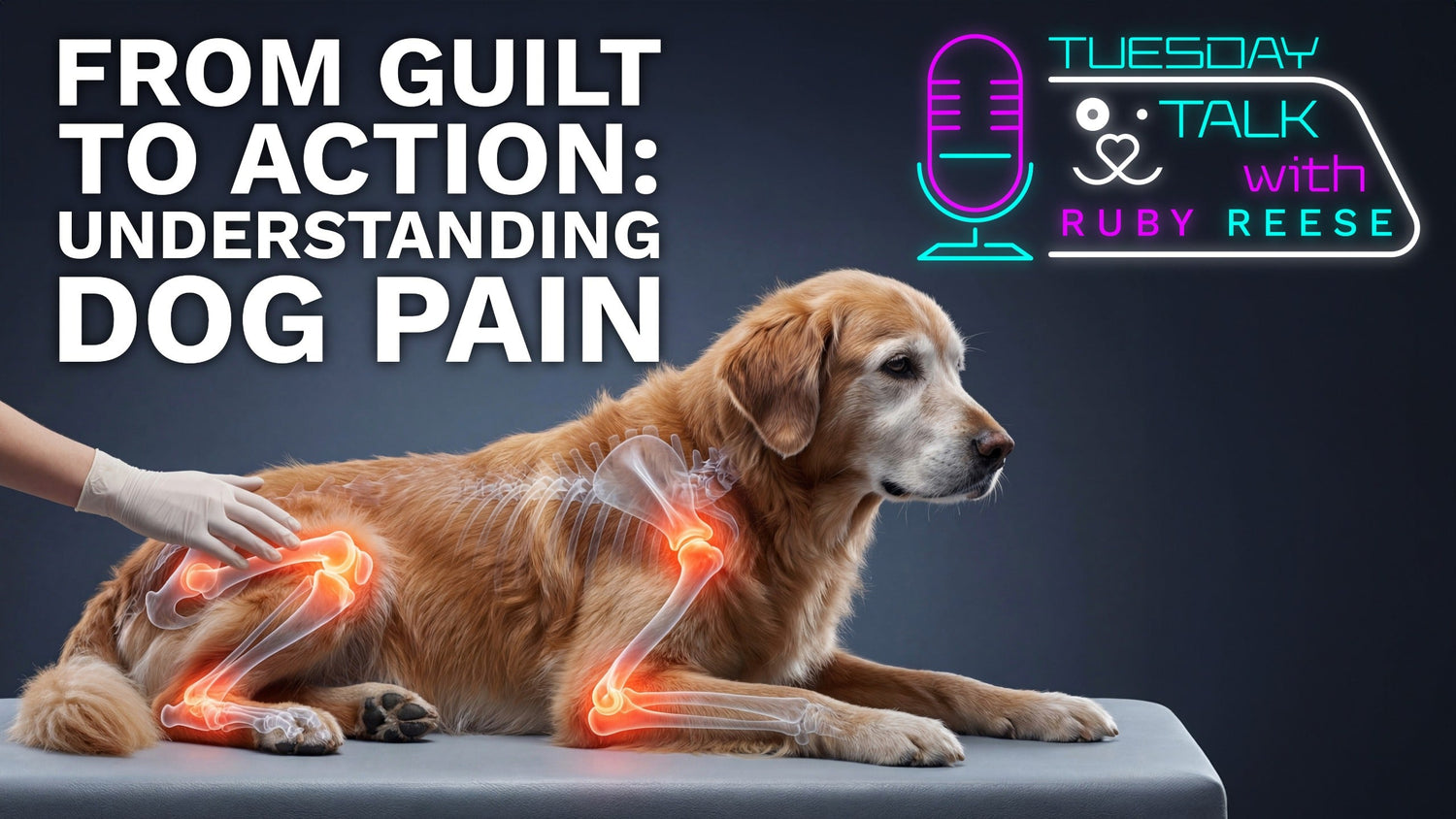
In this episode of Tuesday Talks with Ruby Reese, host Killian is joined by Lea Chevalier from Calm That Snout to discuss the complex and emotional topic of pain in dogs.
Lea shares both professional insights and personal experiences of living with dogs affected by chronic pain. Together, Killian and Lea explore how pain can change a dog’s behaviour, from increased sensitivity and lower tolerance to restlessness, bite behaviour, reactivity, or changes in mobility. They also discuss why signs of pain are often mistaken for quirks, habits, or training issues.
A key part of the conversation focuses on the guilt many dog guardians feel when they realise their dog may have been in pain. Lea highlights that this guilt is understandable, but that owners can only act on what they know. The episode also covers gastrointestinal issues, musculoskeletal pain, exercise changes, professional collaboration, and the importance of finding a good vet, behaviour consultant, physiotherapist, nutritionist, or wider care team to create a clear plan forward.
Key Takeaways
- Chronic pain can be subtle and may not look the same in every dog.
- Pain can affect behaviour by lowering tolerance, increasing sensitivity, and making everyday situations harder to cope with.
- Some behaviours that look like quirks, stubbornness, or training issues may be signs of discomfort.
- Gastrointestinal pain, dental pain, orthopaedic issues, and neurological pain can all influence behaviour.
- Guilt is common when guardians realise their dog may have been in pain, but it is important to turn that guilt into action.
- A clear plan can help both the dog and the human side of the relationship feel more supported.
- Changes to exercise, such as reducing high-impact activities and adding more sniffing, swimming, foraging, digging, or low-impact enrichment, can make a big difference for some dogs.
- Working with the right professionals is key - especially a good vet, certified behaviour consultant, physio, nutritionist, or specialist where needed.
- Knowing what is going on can be difficult emotionally, but it gives guardians the chance to make helpful changes.
Find out more about Lea and Calm That Snout:
Instagram: @calm_that_snout
Website: https://dog-training.ie/https://dog-training.ie/
Please Note: In the interest of keeping episodes conversational and entertaining we will make broad generalisations that may not reflect you, your situation or your pet. If you have any concerns please consult a certified professional who will assess your individual needs.

0 comments