

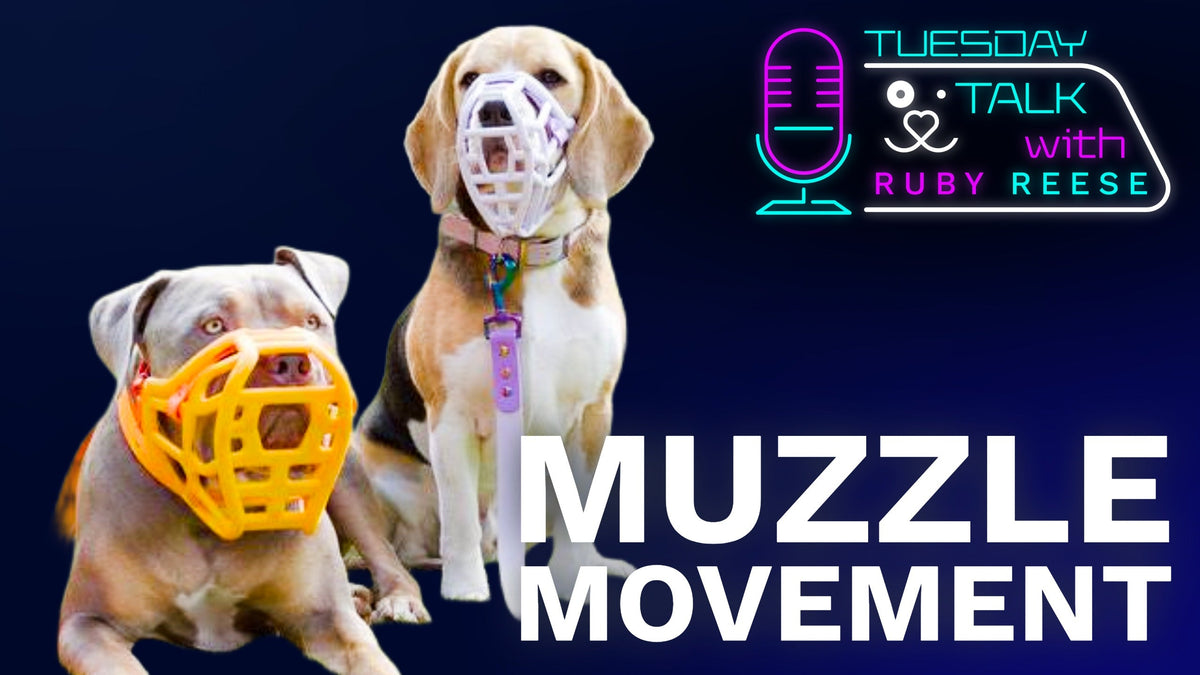
In this episode of Tuesday Talks with Ruby Reese, Killian is joined by Annie Dowell-Caffrey, Community Education and Engagement Officer at The Muzzle Movement, to talk openly about muzzles and the stigma that still surrounds them.
Annie shares the story behind The Muzzle Movement, from a small Instagram community to a worldwide business, and explains the many reasons a dog may wear a muzzle - from scavenging and over-exuberant play to veterinary visits, travel and breed-specific legislation. She covers what to look for in a well-fitting muzzle, including pant space, anatomy and ease of cleaning, and why some muzzle styles raise real welfare concerns.
The conversation also walks through how to introduce a muzzle positively, step by step, why a muzzle should never be used to push a dog beyond their comfort zone, and why a muzzled dog is often a sign of a responsible, proactive guardian.
A thoughtful, practical listen for anyone who has ever wondered about muzzles.
Takeaways
- Dogs wear muzzles for many reasons, not just aggression. These include scavenging, pica, over-exuberant play, high prey drive, veterinary visits, travel and breed-specific legislation.
- A dog in a muzzle is often a sign of a responsible, proactive guardian who is working hard to keep everyone safe.
- A good muzzle must allow a dog to pant, drink, take treats and communicate. Restrictive muzzles that hold the mouth closed are a welfare concern.
- Fabric or occlusion muzzles should only be used in specific situations, such as after jaw surgery and under veterinary recommendation.
- Fit matters most. Check the width at the cheeks, the position on the face and the amount of pant space. Muzzles that dig in can cause rubs and sores, while gappy ones move around too much.
- The right muzzle depends on its purpose. Scavengers, dogs with a bite history and dogs who only need a muzzle briefly at the vet each need different features. Off-the-shelf muzzles will not suit every dog, and custom options exist for unusual conformation.
- Rule out pain first. Dental discomfort, ear problems or a negative history with muzzles can all affect how a dog feels about wearing one.
- Introduce the muzzle as a treat dispenser, go at the dog’s pace, and take the straps slowly - fastening them is the step most often rushed and one of the most important.
- Teach the dog to settle while wearing the muzzle, so it does not become a cue that training or activity is about to start.
- Do not save the muzzle only for stressful events such as vet visits. Build a positive association at other times so it does not become a warning signal.
- A muzzle should be a safety net that supports training and behaviour modification, not a way to keep pushing a dog through stress, for example in grooming.
- Reframe the question from “does my dog need a muzzle?” to “would my dog benefit from muzzle training?” Like a seatbelt, it is a skill worth having even if it is never needed.
Websites & Social Media
The Muzzle Movement
Website: themuzzlemovement.com
Instagram: @the.muzzle.movement
Please Note: In the interest of keeping episodes conversational and entertaining we will make broad generalisations that may not reflect you, your situation or your pet. If you have any concerns please consult a certified professional who will assess your individual needs.

0 comments