

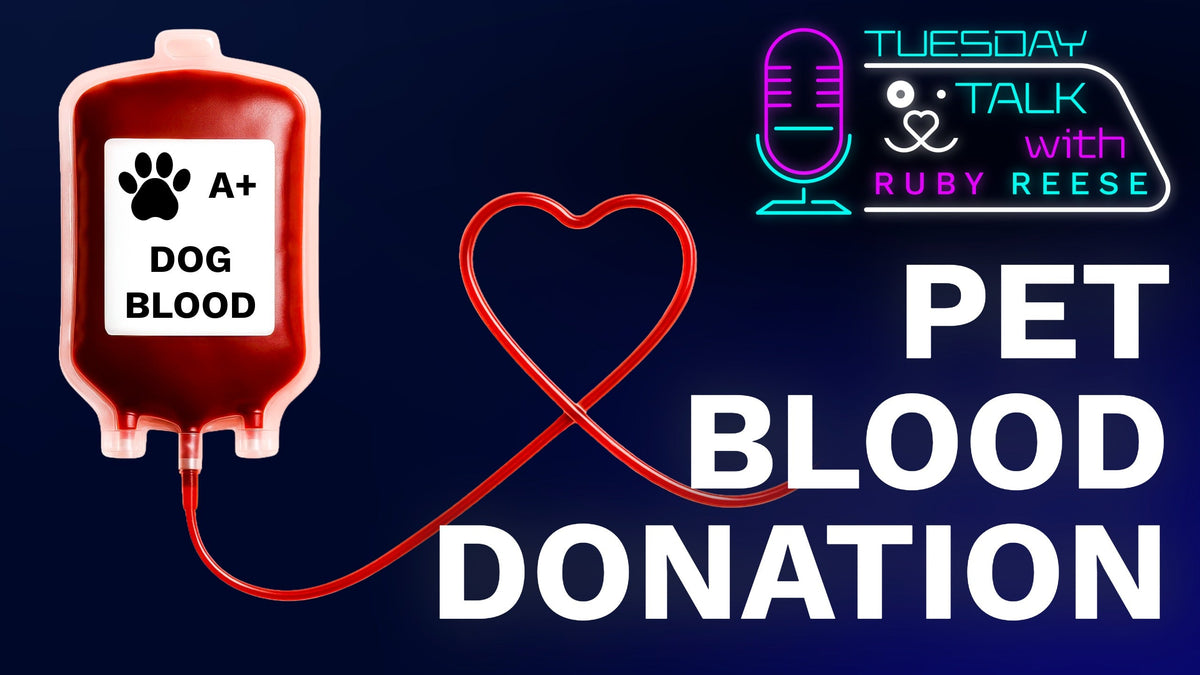
In this episode of Tuesday Talks with Ruby Reese, Killian is joined by Michael Byrne, Technical Officer and coordinator of the Blood Donor Clinic at the UCD Veterinary Hospital, to explore a life-saving service many dog and cat guardians have never heard of.
Michael explains why sick and injured pets need blood transfusions, from road traffic accidents and surgery to immune-mediated anaemia, and how the clinic keeps blood ready for emergencies. He outlines what makes a suitable donor, including weight, age, health and, above all, temperament, and walks through the trial appointment and what happens on donation day. Listeners also learn why greyhounds and golden retrievers are such valued donors, how donated blood is processed and stored, and which myths put owners off.
If you think your dog or cat might qualify, or you simply want to know more, Michael explains how to get in touch. Please share this episode with anyone who might be able to help.
Takeaways
- Dogs and cats can donate blood, and many sick pets need transfusions, including after road traffic accidents, toxin ingestion, surgery and immune-mediated anaemia.
- The UCD Veterinary Hospital runs a voluntary blood bank, established in 2008, which supplies blood only to the patients treated at the hospital. Blood cannot legally be bought or imported in Ireland.
- To be considered, dogs must weigh over 25kg and cats over 4kg, and both must be aged between one and eight years.
- Donors must be healthy, vaccinated and wormed, and should not have travelled abroad to countries with diseases that are not screened for in Ireland.
- Temperament matters most. A donor should be happy and relaxed in the hospital, and the clinic will never stress one animal to help another.
- Becoming a donor is a step-by-step process, starting with a conversation with the clinic and a 30-minute trial appointment that includes a clinical exam and a small blood sample.
- Donation day takes around an hour and a half in total, but the donation itself lasts only seven to ten minutes. Owners are welcome to stay and comfort their dog.
- Donors receive a health check and blood tests before every donation, and the clinic will not go ahead if any marker is off.
- The volume of blood taken is replaced within about seven days. Donors must wait at least three months between donations, but most come once or twice a year.
- Donors retire at eight years old, and there is no obligation to come in whenever called.
- Donated blood is split into red cells, which last 35 days in the fridge, and plasma, which can be frozen for a year. Red cells can also be divided so that one donation can help more than one patient.
- Greyhounds are especially valued because most are DEA 1.1 negative, which makes them close to universal donors, and golden retrievers make up around 40 percent of the donor base.
- The clinic is always looking for new donors. You can contact Michael on 01 716 6137 or at vetblooddonorclinic@ucd.ie, and there are no silly questions.
Websites & Social Media
UCD Veterinary Hospital Blood Donor Clinic
Website: ucd.ie/vthweb/ourservices/blooddonorclinic
Brochure: Blood Donor Clinic Brochure (PDF)
Email: vetblooddonorclinic@ucd.ie
Phone: 01 716 6137
Instagram: @UCDVetHospital
Please Note: In the interest of keeping episodes conversational and entertaining we will make broad generalisations that may not reflect you, your situation or your pet. If you have any concerns please consult a certified professional who will assess your individual needs.

0 comments