

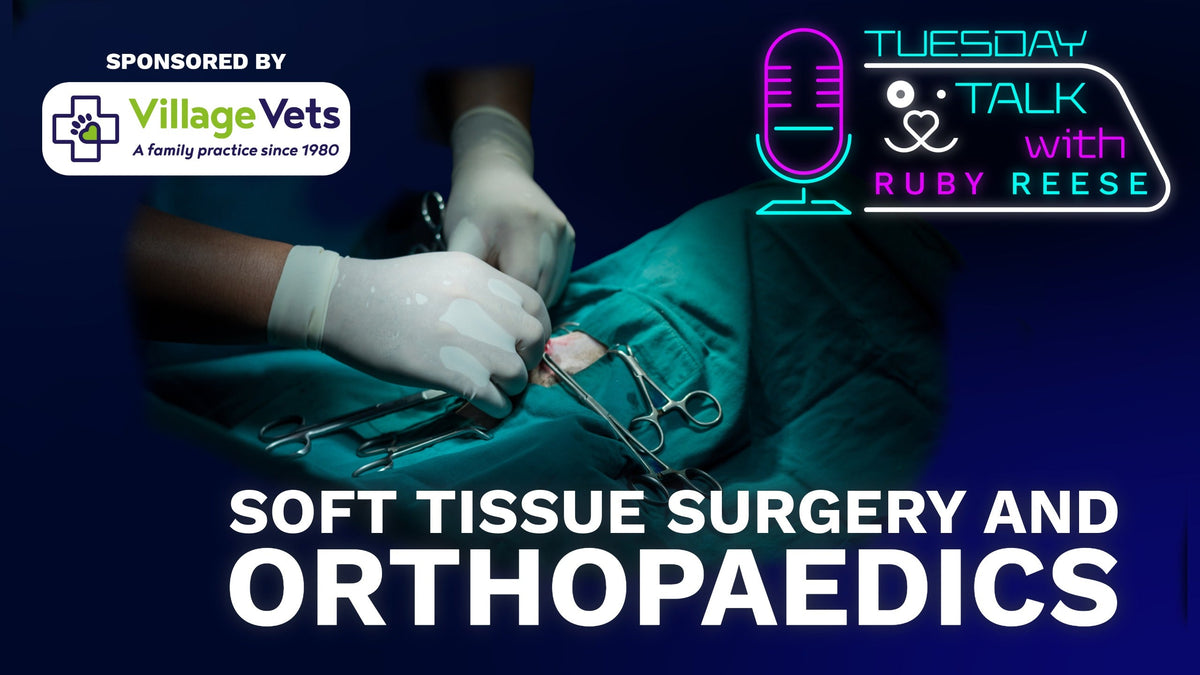
In this episode of Tuesday Talks with Ruby Reese, Killian is joined by Neil O'Sullivan, Veterinary Surgeon at Village Vets Cloyne, for an eye-opening conversation about soft tissue surgery and orthopaedics in dogs.
Neil explains the key differences between the two disciplines, what recovery looks like for each, and why post-operative care at home plays such a crucial role in the success of any procedure. He shares practical advice on spotting the early signs of pain or reduced mobility, when to call the vet, and how to tell the difference between a minor issue and something that needs prompt attention.
The conversation also covers cruciate ligament injuries, developmental conditions such as hip dysplasia and OCD, breed predispositions to joint problems, and how weight management and age-appropriate exercise can make a real difference - particularly in large and giant breed puppies. Neil also addresses some common myths around surgery and offers a thoughtful takeaway for every dog owner.
This episode is sponsored by Village Vets, caring for pets across Ireland since 1980. Find out more at villagevets.ie. And if you are interested in their Pet Health Plan you can find out more at https://www.villagevets.ie/pet-health-plan
Takeaways
- Orthopaedic surgery deals with bones and joints, while soft tissue surgery relates to skin and internal organs. Recovery from orthopaedic procedures is significantly longer - often six to eight weeks of restricted movement compared to ten to fourteen days for soft tissue work.
- Post-operative care at home is just as important as the surgery itself - the success or failure of many procedures depends on how closely owners follow aftercare instructions.
- Early signs of pain or joint problems are not always obvious. Reduced enthusiasm, hesitating before getting up, or needing two attempts to jump somewhere they previously managed easily can all be indicators worth discussing with a vet.
- Cruciate ligament injuries are one of the most common causes of hind limb lameness in dogs. Genetics, weight and exercise patterns - particularly in young and growing dogs - all play a role.
- Large and giant breed puppies require specialist management. A useful guideline is five minutes of exercise per day for every month of age, kept calm and low impact, alongside a diet specifically designed for larger breeds.
- Keeping dogs lean - on the thinner side of normal - encourages steadier, healthier growth and reduces pressure on developing joints.
- What looks like age-related slowing down in a senior dog may actually be pain from arthritis or another underlying condition - always worth a veterinary examination.
- Dogs are not getting adequate exercise simply by pottering around the house or garden. Understanding the full picture of a dog's daily activity - indoors and outdoors - is important for their overall health.
- Genetics cannot be changed, but lifestyle and management decisions from puppyhood onwards can have a significant impact on whether genetic predispositions develop into disease.
Websites & Social Media
Village Vets
Website: villagevets.ie
Instagram: @villagevets.ireland
Please Note: In the interest of keeping episodes conversational and entertaining we will make broad generalisations that may not reflect you, your situation or your pet. If you have any concerns please consult a certified professional who will assess your individual needs.
0 comments